History And Thought
Where Does The Word Pepper Come From? An Ingredient’s Borrowed Names
Nişanyan Sözlük explains an older form of isot, recorded in 1477, as meaning black pepper. Today the same name may bring to mind a product made from another plant. The word persists while its ingredient changes. Following Turkish biber, English pepper, Nahuatl chilli and Taíno-derived ají reveals that names at the table have histories as mobile as the plants themselves.
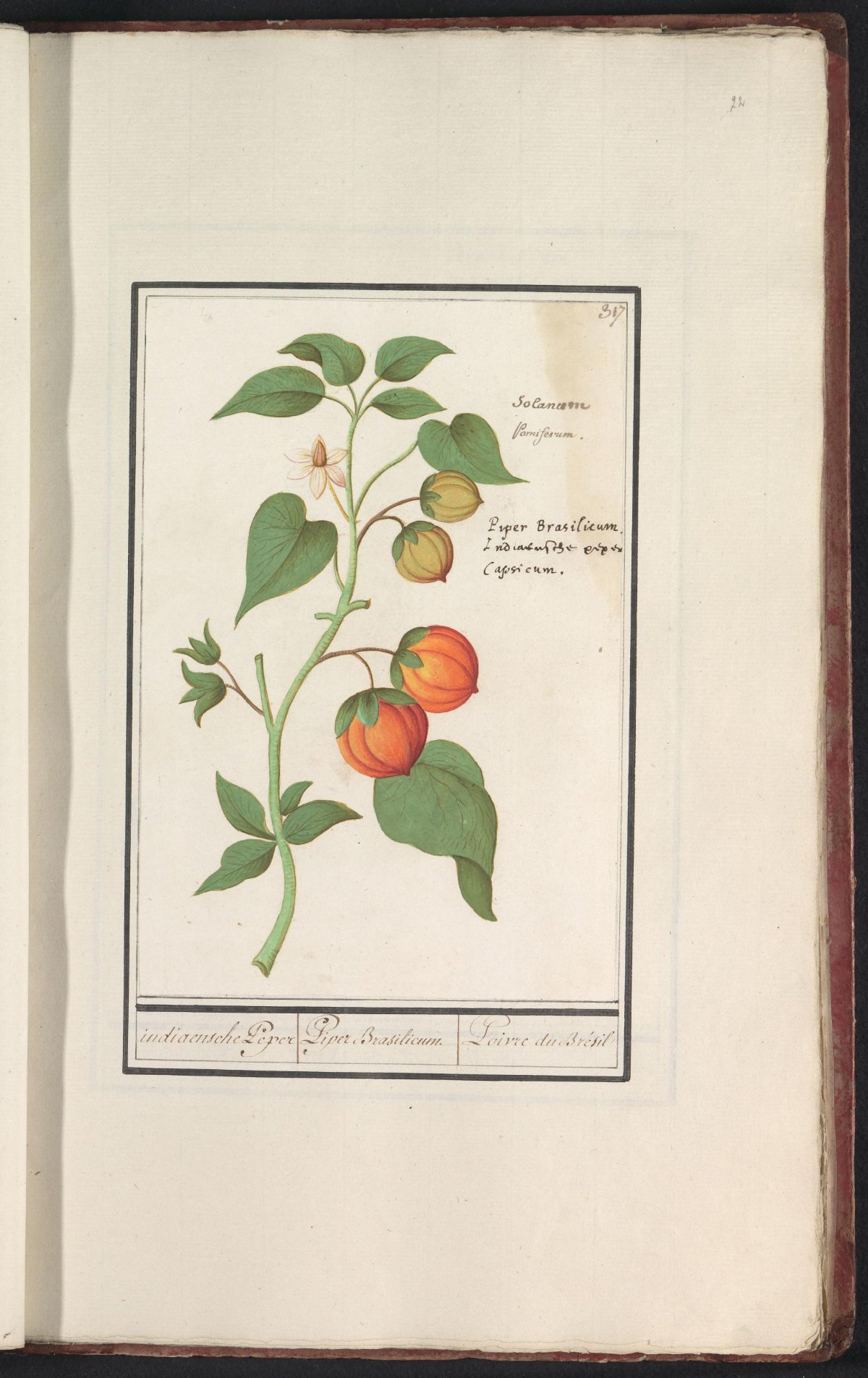
An Old Spice Name On A New Fruit
The Turkish Language Association gives the origin of biber as Greek. Merriam-Webster’s English pepper entry lists Old English pipor, Latin piper and Greek peperi. In Monier-Williams’ Sanskrit dictionary of 1899, pippalī names long pepper, both the Piper longum plant and its fruit. Read together, these records reveal older spice names around words now used for Capsicum.
The old spice and the newer fruit remain neighbours in Merriam-Webster’s pepper entry, which defines both black pepper from Piper nigrum and Capsicum plants. Encountering pepper in a recipe therefore leaves an ingredient question open. Descriptions of form, colour and use help answer it.
Chilli And Ají: Names In Indigenous Languages
UNAM’s Gran Diccionario Náhuatl traces chilli through historical dictionary entries, including Molina’s dictionary of 1571. The RAE connects Spanish chile to Nahuatl chilli and ají to Taíno. English chili, chile and the chiefly British chilli also form part of the first name’s journey through Spanish.
In Molina’s 1571 entry, the Spanish explanation of chilli places axi beside pimienta de las indias. A single dictionary line brings together a Nahuatl name, a name adopted from the Antilles and a familiar European spice comparison. This small record shows the bridges of meaning used to explain words as they move between languages.
Chilli and ají preserve a richness of naming that can disappear when everything is viewed through European pepper words. They open onto languages in which the ingredient was already known and discussed. They do not alone locate its domestication; that investigation also needs botanical remains and genetic evidence.
Isot: An Old Word, A Changing Product
Nişanyan Sözlük explains isot through the compound issi ot and quotes a 1477 record from Lugat-i Halimi. The dictionary glosses this older compound as black pepper. The date belongs to the witness documenting the older word form; the American Capsicum product now bearing the same name illustrates its later use for a different ingredient. Following isot’s past requires reading the name’s documented age alongside the ingredients it has named over time.
Şanlıurfa Metropolitan Municipality’s culinary record explains that isot is a general name for peppers in Urfa usage, while pepper flakes are called kuru isot, or dried isot. The same record describes red peppers being dried, darkened and then pounded into flakes. The word thus invites us to investigate both the pepper and its processed product. This is why we examine ingredient identity alongside the name when reading historical issi ot and present-day isot.
The current TDK entry for biber shows another expansion within the kitchen: the plant, its fresh edible product, and its dried product used as a spice. A recipe line naming biber leaves us looking for the form to pick up: a fresh fruit or a spoonful of seasoning.
Context also matters for acı. In everyday Turkish, the word can describe bitter taste, chilli heat or pain. The TDK entry records these different uses; sensory science investigates bitterness and pungency as distinct processes. Knowing the intended meaning in food writing helps us understand both the ingredient and the experience described.
Three Questions To Ask Of A Name
Sometimes the most interesting route from an old recipe to a present-day sauce runs through a single word. Recognising its sound is a beginning; discovering what it names on that page brings its kitchen meaning into view.
| Question | Information Sought |
|---|---|
| In which language and at what date is the word recorded? | The name’s documented form and date |
| Which plant or product does this record describe? | Botanical identity, an ingredient or a processed product |
| Does present-day usage retain the same meaning? | Meanings retained or changed over time |
The distance between the black-pepper meaning in 1477 and present-day kuru isot does not make the word less old; it gives it a fuller history. Those carrying a name into another century have not always attached it to the same ingredient. Sometimes the memory of a word at the table lies in that change.
Sources And Further Reading
- Monier-Williams · Sanskrit-English Dictionary (1899), entry pippalī, Cologne digital edition
Reading area: The 1899 dictionary entry pippalī names the Piper longum plant and berry. The [University of Hyderabad text](https://sanskrit.uohyd.ac.in/SKT/MW/158.html) provides an accessible version of the same entry; the Cologne link is retained.
Accessed:
- Merriam-Webster · pepper: definitions and word history
Reading area: Pepper senses for Piper nigrum and Capsicum; Old English pipor, Latin piper, Greek peperi.
Accessed:
- Turkish Language Association, Güncel Türkçe Sözlük · biber
Reading area: Greek origin field and three senses: the Capsicum annuum plant, its fresh edible product and its dried spice product.
Accessed:
- UNAM · Gran Diccionario Náhuatl: chilli
Reading area: Molina 1571, Molina_2, fol. 21r: chilli is explained as axi o pimienta de las indias. [Direct entry](https://gdn.iib.unam.mx/diccionario/chilli/37711).
Accessed:
- RAE / ASALE · chile
Reading area: From Nahuatl chilli.
Accessed:
- RAE / ASALE · ají
Reading area: Taíno origin.
Accessed:
- Merriam-Webster · chili: spellings and word history
Reading area: Chili, chile and chiefly British chilli variants; Spanish chile from Nahuatl chīlli.
Accessed:
- Nişanyan Sözlük · isot
Reading area: The compound issi ot, its 1477 record in Lugat-i Halimi and its historical black-pepper meaning.
Accessed:
- Turkish Language Association, Güncel Türkçe Sözlük · acı
Reading area: Everyday meanings concerning bitter taste, chilli heat and pain.
Accessed:
- Şanlıurfa Metropolitan Municipality · İsot
Reading area: Municipal culinary record: isot as a general pepper name in Urfa usage, kuru isot for pepper flakes, and the drying, darkening and pounding of peppers into flakes.
Accessed: