History And Thought
Taste And Aesthetic Judgment: Hume And Brillat-Savarin
Imagine three comments about a hot sauce: “It has a herbal aroma”, “I like it”, and “It works well with this dish”. They concern one encounter but direct attention differently. Hume’s key in a wine cask and Brillat-Savarin’s peach invite us to examine the route from a noticed detail to the grounds for appreciation.
Describing, Enjoying And Evaluating Sensation
The first comment describes an aroma. The second expresses a response; the third assesses a relationship between sauce and dish. Explaining that last claim asks more of us: which quality supports which detail, and what becomes more distinct in the food? Looking for reasons turns appreciation into a conversation.
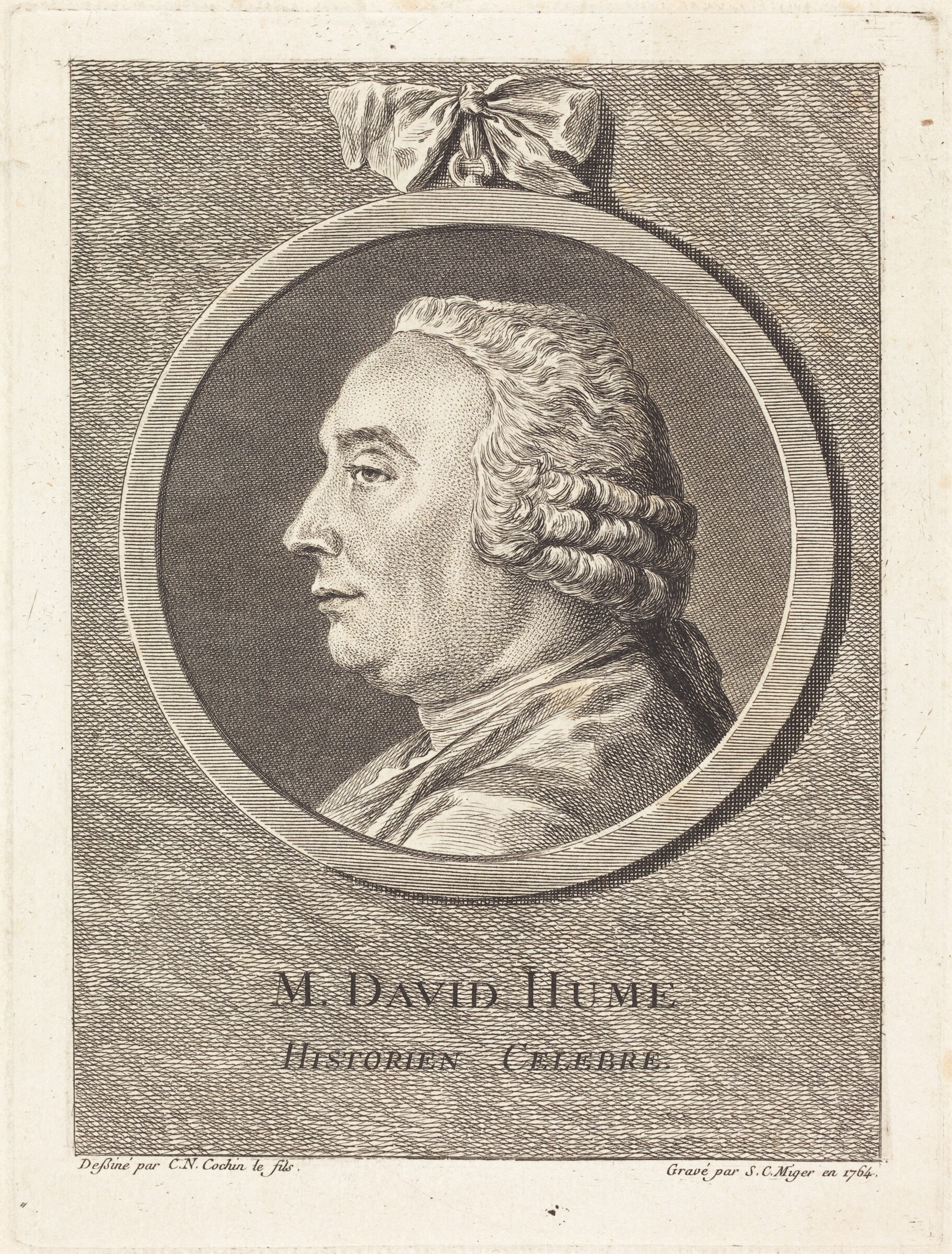
The analogy between distinguishing sensory details and evaluating art is one question opened by David Hume’s Of the Standard of Taste. Developed through literature and art, the essay first appeared in Four Dissertations in 1757. ST followed by a number refers to the essay’s paragraphs in Hume Texts Online.
The Key In Hume’s Wine Cask
Hume retells a story told by Sancho: two relatives assess the same wine, one detecting a faint trace of leather, the other iron. Their judgments are mocked until the emptied cask reveals an old key attached to a leather thong. Hume uses the literary example to consider the ability to distinguish small details (ST 15–16).
The key gives the two mocked observations a striking literary vindication. Hume is interested in sensitivity to small traces. When we call our imagined sauce herbal, we too can ask what drew our attention. But we should not expect one hidden key to prove that it works well with a dish. Explaining the relationship remains our task.
Sources For This Section
What Do Practice And Comparison Add To Judgment?
Hume’s conditions for a good critic include the ability to distinguish fine details, practice, comparison, good sense and freedom from prejudice. As the Stanford Encyclopedia of Philosophy emphasises, this raises a normative question: why do we give some aesthetic assessments greater weight? That differs from treating every preference as a statement of fact that is either true or false. (ST 18–23.)
For Hume, practice involves returning to works of the same kind. Features confused at first become clearer, while comparison reveals the weight we give them. Applied to gastronomy, this helps explain why meeting a familiar sauce in another dish can raise fresh questions: the sauce may be familiar while the relationship changes. (ST 18–20.)
The essay’s language of superior and inferior taste also carries its period’s hierarchies; it is no ready-made ranking of people or cuisines today. Near the end, Hume allows for differences arising from temperament, period and setting that make neither party defective (ST 28–30). Read this way, the discussion draws attention to reasons for judgment while leaving room for personal preference.
Brillat-Savarin’s Peach: From Impression To Judgment
In the second meditation of Physiologie du goût, Brillat-Savarin distinguishes direct, complete and reflected sensation. The first oral impression, the experience expanded by the food’s aroma and the subsequent judgment about these impressions are treated separately. The peach in §11 provides a historical scene in which an encounter unfolds over time. The French edition consulted dates from 1867.
The peach scene begins with the fruit’s smell, followed by coolness and acidity in the mouth, then the aroma revealed during swallowing. The person then evaluates the experience. The example’s movement of thought lies in this passage from perceived features to a judgment about the impression they leave.
Judgment follows sensation in this scene, and the account unfolds through time. That is a useful thought when one adjective seems too small for a pepper sauce’s first aroma and later impression. Brillat-Savarin’s physiology belongs to nineteenth-century knowledge. The peach remains valuable here through its attention to the course of experience rather than as a current mechanism of smell.
Sources For This Section
How Does Gastronomy Extend Beyond The Plate?
In §18 of the third meditation, gastronomy is defined as reasoned knowledge of matters relating to human nourishment. Brillat-Savarin brings natural history, physics, chemistry, cooking, trade and political economy into one framework. The classification, preparation and circulation of ingredients become parts of a shared field of thought.
Each field has a distinct task in this account: natural history classifies foods; physics examines their composition and qualities; chemistry analyses them; and cookery turns them into palatable dishes. Commerce concerns buying and selling, while political economy concerns tax resources and exchange between nations. Gastronomy’s scope thus opens out from enjoying a single mouthful to the arrangements through which food is produced and circulated.
Within this broad frame, “I like this sauce” can open in further directions. We may become curious about its ingredients, preparation or route to the table. Hume’s question of judgment and Brillat-Savarin’s expansive gastronomy suggest that a conversation need not end when a preference has been stated.
| Question | What The Statement Does |
|---|---|
| Which sensory quality is noticed? | “It has a herbal aroma.” |
| What response does the encounter prompt? | “I like it.” |
| What relationship between sauce and dish is being proposed? | “It works well with this dish.” |
Sources For This Section
Reasons Within A Gastronomic Sentence
Returning to the opening comments, the third asks for the fullest explanation. Beyond naming the herbal aroma or stating a preference, we try to describe how sauce and food meet. Another person need not enjoy the same combination to understand the detail we noticed. Reasons can be shared without requiring agreement.
Hume’s story ends with a key being found. Appreciation at the table seldom turns on a single object; it may lie in how we relate the qualities encountered. “Why did you like it?” need not be a test. It can invite us to consider another person’s mouthful from the point that drew their attention.
Sources And Further Reading
- David Hume · Of the Standard of Taste
Reading area: Hume Texts Online; ST 15–16, 18–23 and 28–30; practice, rereading and comparison in ST 18–20, and the critic’s five combined qualities in ST 23. First publication is distinct from the version presented online.
Accessed:
- Hume Texts Online · publication context
Reading area: Amyas Merivale and Peter Millican’s editorial note for Of Suicide and Of the Immortality of the Soul; the context of Of the Standard of Taste’s first publication in Four Dissertations in 1757.
Accessed:
- Stanford Encyclopedia of Philosophy · Hume’s Aesthetics
Reading area: Substantive revision dated 21 April 2020; particularly section 4 on normative judgment and the critic.
Accessed:
- Brillat-Savarin · On Taste, Meditation II
Reading area: Transcription of the 1867 French edition; §11 on direct, complete and reflected sensation; the peach’s smell, coolness/acidity, aroma during swallowing and subsequent judgment. Historical physiological language.
Accessed:
- Brillat-Savarin · On Gastronomy, Meditation III
Reading area: Transcription of the 1867 French edition; §18 on gastronomy’s definition and the tasks of classification, examination, preparation and circulation assigned to natural history, physics, chemistry, cookery, commerce and political economy.
Accessed: