Senses And Ingredients
How To Choose Hot Sauce: Ingredients, Texture And Use
Imagine choosing a hot sauce to serve with a simple vegetable soup. One bottle lists pepper, vinegar and salt; another lists pepper, fruit and a thickener. Which might offer the accompaniment you want? The choice begins with ingredient names and becomes clearer through the sauce’s smell, texture and flavour within the soup.
Consider Use First, Then Ingredients
A sauce stirred into the pot and one offered at the table invite different decisions. In the first case, its amount is distributed through the preparation; in the second, each person adjusts their own bowl. Before choosing a bottle, consider the role you want the sauce to play in that meal.
The Turkish Ministry of Agriculture and Forestry’s statement of 4 August 2025 lists required information including food name, ingredients, substances causing allergies or intolerances, special storage and use conditions where necessary, operator name and address, and lot number. Initial clues to sauce character lie especially in the ingredients: pepper name, sourness-related components, process terms and thickening ingredients.
The order of the ingredients also conveys information. The regulation’s general rule is to list ingredients in descending order by weight, according to the quantities used in production. If the label also gives a percentage for the pepper or fruit, read its name alongside that quantity. This lets you compare which ingredients come first in the recipe and the stated proportion of a highlighted ingredient.
These hypothetical labels are examples designed to make selection questions concrete.
| Example Label | What The Label Tells Us | A Question For The Choice |
|---|---|---|
| A: pepper, vinegar, salt | These three ingredients are named. | Am I looking to explore the pepper or a vinegar-related character alongside the dish? |
| B: pepper, fruit, thickener | The fruit and thickener are also named. | Which fruit and texture qualities am I looking for, and would I like to taste them or ask the producer? |
Returning to the soup, label A may prompt curiosity about the meeting of pepper and vinegar; label B directs attention towards the fruit and consistency. First become familiar with the sauce’s own smell and texture, then notice how a small amount joins the soup. Ingredient names become questions that tasting can explore.
Turn Label Words Into Questions About Use
| Label Statement | What It Describes | Further Reading |
|---|---|---|
| Pepper name or cultivar | Reported ingredient identity | The botanical portrait of the pepper |
| Vinegar, lemon juice or acidity regulator | Acidity-related ingredients; sensory effects depend on composition | Sourness, pH and acidity |
| Fermented, fermentation | Process information reported by the producer | Fermentation |
| Fruit, vegetables or named thickeners | Ingredient clues about texture | The structure of sauce |
| SHU or a heat value | A heat statement read with its method, sample and supporting record | The language of chilli heat |
| Lot number, STT or TETT | The bottle’s production identity and type of date | Label, date and storage information |
Vinegar or lemon juice indicates possible sources of sourness; tasting reveals its intensity. “Fermented” describes a transformation during production. Live microorganisms in the finished food and probiotic properties require further information. Knowing the sample and method behind an SHU value likewise helps us ask the same question of two numbers.
Describe Taste, Aroma, Texture And Heat Separately
Words such as sour, aromatic, smooth or hot describe different parts of the experience. Separating them helps define the sauce you are looking for.
| Word | Focus Of The Description |
|---|---|
| Sourness or sweetness | A taste quality |
| Herbal smell | An odour description |
| Smooth or particulate | A texture description |
| Pungent or burning | A chemesthetic sensation |
Chemesthesis covers chemically induced sensations such as burning and cooling. Capsaicin heat is studied in this area, with the ion channel TRPV1 forming part of the explanation. Distinguishing taste from chemesthesis does not mean that one substance cannot evoke several sensations. Roukka and colleagues’ 2023 paper notes that capsaicin can also evoke bitterness. Naming heat, bitterness and taste qualities such as sweetness or sourness separately is therefore clearer.
Keep Presentation Distinct From Ingredients
In Stewart and Goss’s 2013 study, 48 volunteers assessed cheesecake on black or white, round or square plates. Colour and shape contributed together to evaluations. Square and round plates differed in surface area, and including general cheesecake liking in the analysis changed interpretation of liking results. The study shows presentation contributing to food evaluation within the context of the specific plates and personal preference.
Sources For This Section
Compare With Five Questions
- Which pepper is named? A declared name or variety helps identify the ingredient.
- Which ingredients relate to acidity? Vinegar, fruit juice and acidity regulators can be read according to their stated roles.
- How is fermentation described? It concerns production; live microorganisms and probiotic properties require separate consideration.
- Which ingredients contribute to texture? Fruit, vegetables, oil and thickeners can play different structural roles.
- How is heat declared? If an SHU value is given, sample and method information make comparisons more meaningful.
Bottle And Label: Identity And Ingredient Information
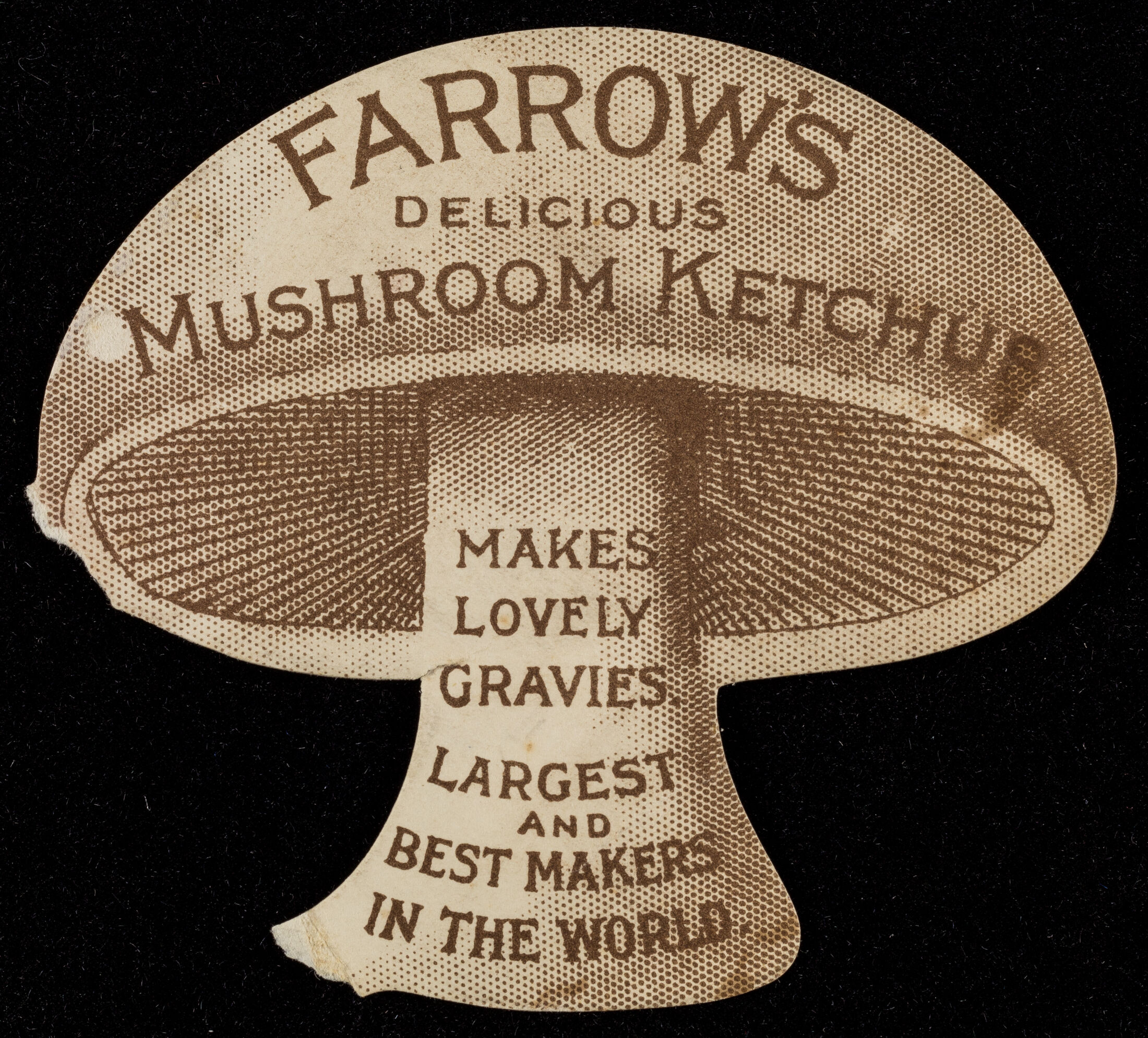
Bottle shape and front-label design convey brand identity. Ingredients and required label fields supply information about contents, dates and use. Presentation may contribute to expectation; the ingredient list remains the source for what the sauce contains. The historical mushroom-ketchup advertising card on this page likewise shows an ingredient identity carried into a product’s appearance.
From Selection To A Decision About Use
The decision finally returns to the soup. If you plan to serve the sauce separately, add a little to your bowl and notice what changes in aroma, sourness, heat and texture. Has the quality you were seeking become more distinct? What you notice in that mouthful can guide the next addition.
Sources And Further Reading
- Türkiye Ministry of Agriculture and Forestry · Label information
Reading area: Food-label information fields, 2025.
Accessed:
- Türkiye Ministry of Agriculture and Forestry · STT and TETT dates, 3 February 2026
Reading area: Consumer explanation dated 3 February 2026: STT and TETT date terms.
Accessed:
- Factors explaining individual differences in the oral perception of capsaicin, l-menthol, and aluminum ammonium sulfate
Reading area: Human sensory research, 2023: chemesthesis terminology and sensory qualities of capsaicin, including pungency and bitterness.
Accessed:
- TRPs in Taste and Chemesthesis
Reading area: Accessible publisher abstract of a 2014 scholarly review chapter: TRPV1 and chemesthesis.
Accessed:
- Plate shape and colour interact to influence taste and quality judgments
Reading area: Cheesecake experiment, 2013: 48 volunteers, black/white and round/square plates; colour–shape interaction, plate-area differences and general-liking covariate.
Accessed:
- Marco and colleagues · ISAPP consensus statement on fermented foods, 2021
Reading area: Definition; fermented foods versus probiotics; Box 1 and Table 1.
Accessed:
- Turkish Food Codex Regulation on Food Labelling and Consumer Information · Ministry copy
Reading area: Article 21 and Annex 4 on descending ingredient order by weight; Article 28 and Annex 7 on post-opening conditions where needed and date presentation. Ministry-hosted copy of the text published on 26 January 2017.
Accessed:
- Ministry of Agriculture and Forestry · Food Labelling Regulation amendment of 6 April 2024
Reading area: Full text of the 2024 amendment: amended articles and Annex 2 rows, with the 31 December 2026 compliance date. Articles 21 and 28 and Annex 7 are not amended by this text.
Accessed: